
Feature bloat. Hostage tiers. Mandatory AI sparkles. How enterprise software convinced creative studios to trade billable craft for administrative theatre.
Written by:
For nearly a decade – from 2017 until the spring of 2026 – my design studio fell into the same trap that ensnares almost every growing creative business: we confused operational maturity with software complexity.
Like most studios, our administrative journey began with pocket paper notebooks and messy desktop stickies. As the team grew, we graduated to elaborate Excel spreadsheets. Those sheets were masterclasses in formula design – interconnected, colour-coded, and brittle. The moment we needed clean monthly utilisation reports, historical project margins, or cross-client expense summaries, the spreadsheets began to creak under their own weight.
So, we did what the tech industry tells every ambitious agency founder to do: we went looking for a “real” system. We signed up for a heavy, all-in-one ERP (Enterprise Resource Planning).
It took us nine years of paying exorbitant monthly invoices to realise a fundamental truth about modern SaaS: enterprise software isn’t built to make your work simpler. It is built to justify its own subscription tiers.
The Hostage Tier: Paying for 100% to Use 5%
The modern B2B SaaS pricing model is built on deliberate fragmentation.
Look closely at the pricing matrices of the dominant agency management platforms. The basic tier offers task boards. The middle tier unlocks time tracking. But the moment you want the natural conclusion of that work – turning logged hours into an actual invoice, tracking external project expenses against budgets, or setting custom hourly rates per role – you hit a paywall.
To get the essential chain – work done, time recorded, bill sent – a small studio of up to 10 people is forced directly into the top enterprise tier at €50 or more per seat every month.
You find yourself paying hundreds of euros a month for automated capacity-planning algorithms, resource heatmaps designed for 500-person consultancies, multi-currency hedging modules, and hundreds of custom metadata fields your team will never touch. You use 5% of the machine, but you pay for the entire factory floor because the one switch you actually need is locked in the executive suite.
Worse, your team pays the hidden administrative tax: 15 minutes a day spent clicking through nested modals, updating dropdown statuses, and closing unsolicited tooltips.
The Keyword Carousel vs Studio Reality
Enterprise project management tools feel so disconnected from daily studio work for a structural reason: software conglomerates build for venture capital narratives, not agency margins.
Over the past decade, we have watched the enterprise SaaS carousel spin through every Silicon Valley trend:
- Crypto & Web3: Every tool promised smart-contract billing that nobody asked for.
- The Metaverse: Virtual 3D project rooms replaced clean task lists.
- NFTs: Digital certificate buzzwords populated product roadmaps while core features stagnated.
- AI Theatre: Today, every menu bar features an omnipresent sparkle icon offering an “AI Assistant” to write marketing poems, draft hallucinated task briefs, or summarise a two-sentence comment into a generic paragraph.

Innovation has its place, but not at the expense of primary utility.
While enterprise platforms burn millions of engineering hours cramming generative AI into every corner of their interface, try asking them for a practical European administrative essential: a standards-compliant, structured XML e-invoice export.
Across the European Union, if your design studio works with public institutions, municipal departments, or state-level clients, structured XML e-invoicing is not an optional novelty – it is a mandatory legal requirement. Yet in most US-centric or enterprise-bloated ERPs, this fundamental feature is absent or locked behind custom enterprise API integrations that require weeks of developer setup.
A studio doesn’t need an algorithm to write a fake design brief. A studio needs to bill a municipal identity project accurately on a Friday afternoon and get paid on Monday without wrestling three third-party converters.
The Iron Chain: Four Primitives and Nothing Else
A sustainable creative business does not require 40 separate applications or an enterprise ERP with 600 configuration toggles. To remain solvent, profitable, and sane, an agency needs an unbroken link across exactly four operational primitives:
Tasks → Time Tracking → Expenses → Invoicing
When these four steps live inside one simple, cohesive system, the administrative friction that drains studio profit vanishes:
- Tasks: Clean, discrete deliverables without 200 custom status tags. Either work is to do, in progress, or completed.
- Time Tracking: Frictionless, humane tracking tied directly to the deliverable. A straightforward stopwatch built for billable accuracy and mutual trust, without surveillance or micromanagement.
- Expenses: Real out-of-pocket costs (fonts, stock licenses, print proofs, contractor fees) logged immediately against the project scope so they are never forgotten when the client is billed.
- Invoices: Instant, uncorrupted billing generated directly from tracked time and logged expenses. Including native XML e-invoicing ready for government and corporate compliance.
The moment this chain breaks – when tasks live in one app, hours in a second, expenses in a spreadsheet, and invoices in a fourth – billable hours leak into the cracks. Studio directors end up spending their weekends playing detective across CSV exports instead of reviewing creative craft.
Radical Craft Over Creepy Surveillance
As project management software grew bloated, it also grew invasive. A disturbing segment of the agency tracking market turned toward active employee surveillance: background webcam captures, continuous screen recording, and keystroke counters.
We reject this entirely.
Fear doesn’t produce great brand identities, intuitive user experiences, or sharp digital products. Focused craft, deep thought, and psychological safety produce them. A senior designer staring out the window for twenty minutes is often doing the most critical conceptual work of the entire sprint.
Surveillance software does not produce productivity; it produces resentment, evasion, and mouse-jiggler theatre. Sane studios operate on mutual trust, transparent accountability, and direct billable attribution – not digital micromanagement.
Data Sovereignty: The European Standard
Where your agency’s operational data lives matters just as much as how the interface looks.
Creative agencies handle deeply sensitive intellectual property: unannounced rebrands, confidential product launches, NDA-protected patent filings, and proprietary client rate sheets. Dumping this data into massive multi-tenant database clusters – where client information is commingled across millions of accounts and frequently indexed to train third-party machine learning models – is an unacceptable liability.
Software built for serious studios must uphold a higher operational standard:
- Dedicated Schema Isolation: Every studio’s workspace should live in its own PostgreSQL database schema, ensuring complete data isolation from other tenants.
- 100% EU Infrastructure: Hosted within sovereign European infrastructure (DigitalOcean, LLC (Netherlands)) subject to strict GDPR standards, without cross-border legal ambiguity.
- Zero Model Scraping: Your client briefs, timelines, and commercial financials belong to you. They should never serve as training fodder for an external AI model.
The Antidote to Enterprise Exhaustion
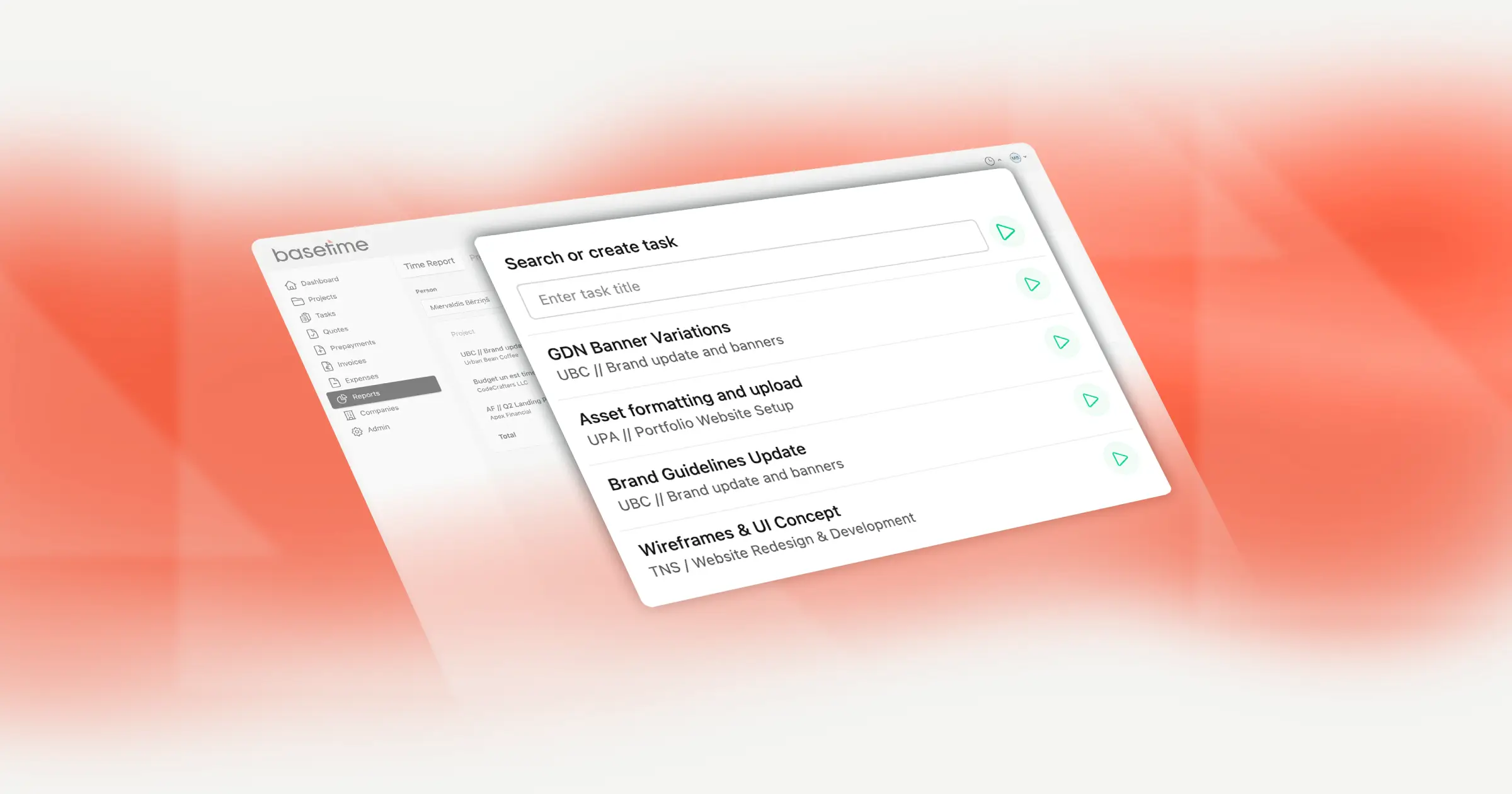
We did not build BASETIME to compete in the enterprise feature arms race. We built it to dismantle the idea that running a disciplined studio requires enterprise overhead.
No automated 40-step setup wizards that leave you with an empty, confusing dashboard. No creeping pricing tiers designed to force you into features you will never use. Just a predictable flat rate (€9 per user per month, or €90 per year) and a dedicated workspace configured directly for your team’s workflow.
If your studio is tired of paying for software theatre, it is time to return to boring, reliable craft.
We personally configure every new studio workspace, ensuring your tasks, time, and billing flow in one clean line from day one.